Email marketing in 2026 is no longer about sending the same newsletter to everyone on your list. The best email marketing platforms now combine automation, personalisation, analytics, and AI to help brands deliver timely, relevant messages at scale — without losing the human touch. As inboxes become more competitive, platforms that can intelligently adapt content and timing are the ones that stand out.
Whether you’re nurturing B2B leads, running ecommerce campaigns, or building a loyal subscriber base, choosing the right platform can directly impact engagement, conversions, and long-term revenue. Some tools excel at simplicity and speed, while others focus on deep data, advanced workflows, or multichannel campaigns. This guide ranks the top 15 email marketing platforms for 2026, based on real-world usability, flexibility, and growth potential.

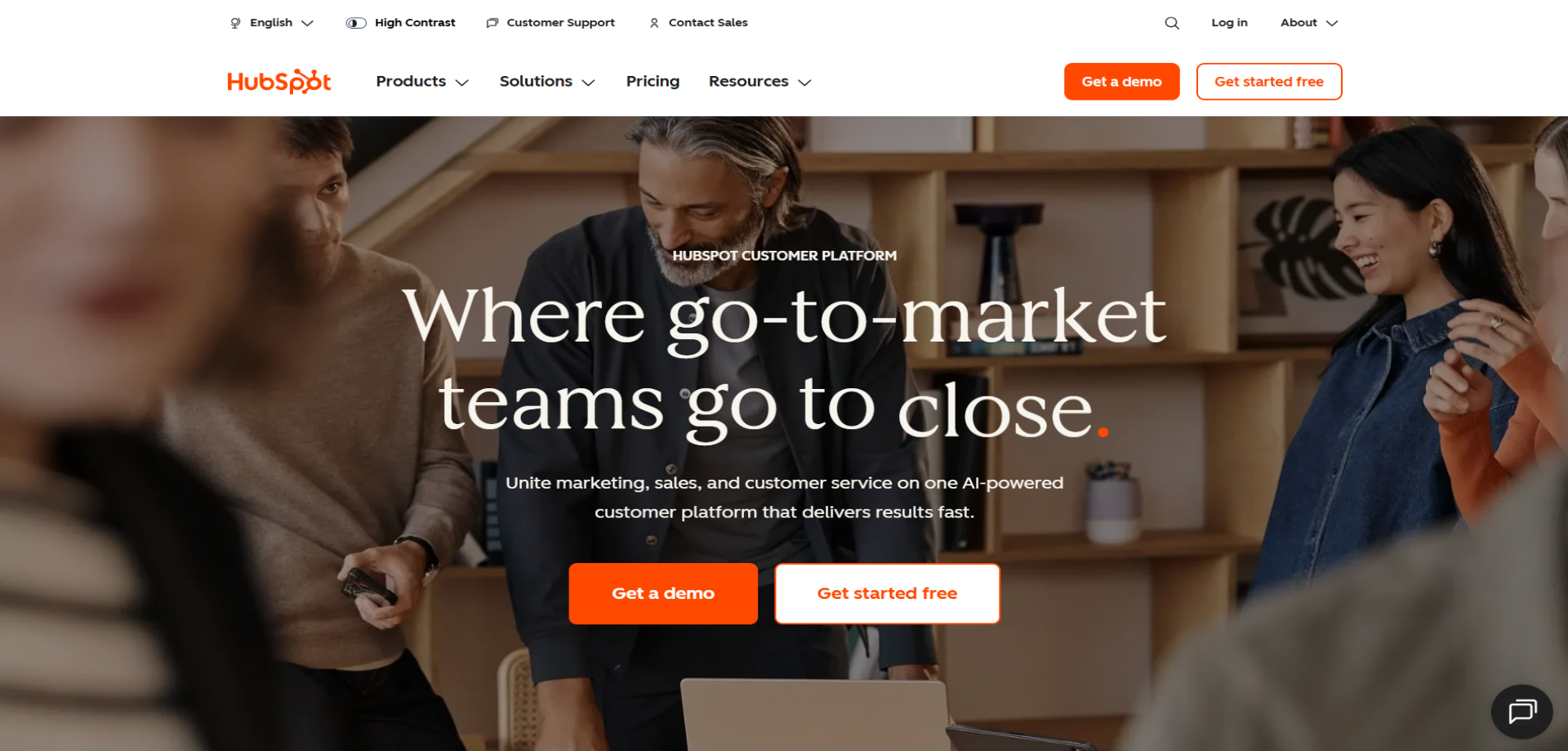
Best for: B2B teams that want email tightly integrated with CRM
Standout strengths:
-
Native CRM and sales alignment
-
Sophisticated automation and lead scoring
-
Excellent reporting across the funnel
Best use cases: HubSpot is ideal for B2B organisations running long sales cycles with multiple touchpoints. It supports lead nurturing, account-based marketing, and lifecycle messaging from first interaction to closed deal. Teams that rely heavily on sales and marketing alignment benefit most from its unified platform.
Watch-outs: HubSpot’s costs increase as you unlock more advanced features and grow your contact database. Smaller teams may find they are paying for tools they don’t fully use. Implementation can also require upfront planning to get the most value.
Pricing snapshot: HubSpot includes free email tools, with paid plans that scale based on features and marketing contacts. Higher tiers unlock advanced automation and reporting. Pricing is best suited to growing or established B2B teams.
Quick take: HubSpot works best when email marketing is part of a wider inbound and revenue operations strategy. It’s not just an email tool, but a full ecosystem. For B2B teams, that depth can be a major advantage.
Case studies: View all case studies
2. Klaviyo


Best for: Ecommerce brands focused on revenue-driven automation
Standout strengths:
-
Deep ecommerce integrations (especially Shopify)
-
Advanced behavioural segmentation
-
Strong revenue and attribution reporting
Best use cases: Klaviyo is designed for ecommerce brands that want to tailor messaging based on browsing, purchasing, and engagement behaviour. It works particularly well for stores running frequent promotions, product launches, or lifecycle campaigns. Brands with consistent traffic and order data will get the most value from its automation capabilities.
Watch-outs: Klaviyo’s pricing can rise quickly as contact lists grow, especially for high-volume senders. Smaller teams may find its depth unnecessary if they only need basic newsletters. It also requires clean data to perform at its best.
Pricing snapshot: Klaviyo offers a free tier for small lists, with pricing that scales based on contact volume and message usage. Costs increase as automation, email, and SMS volumes grow. It is best suited to brands that can justify spend through revenue attribution.
Quick take: Klaviyo is one of the most powerful email marketing platforms available for ecommerce brands that want to connect customer behaviour directly to sales outcomes. It excels when email is treated as a revenue channel, not just a communication tool. For data-driven ecommerce teams, it remains a market leader.
Case studies: View all case studies
3. Mailchimp
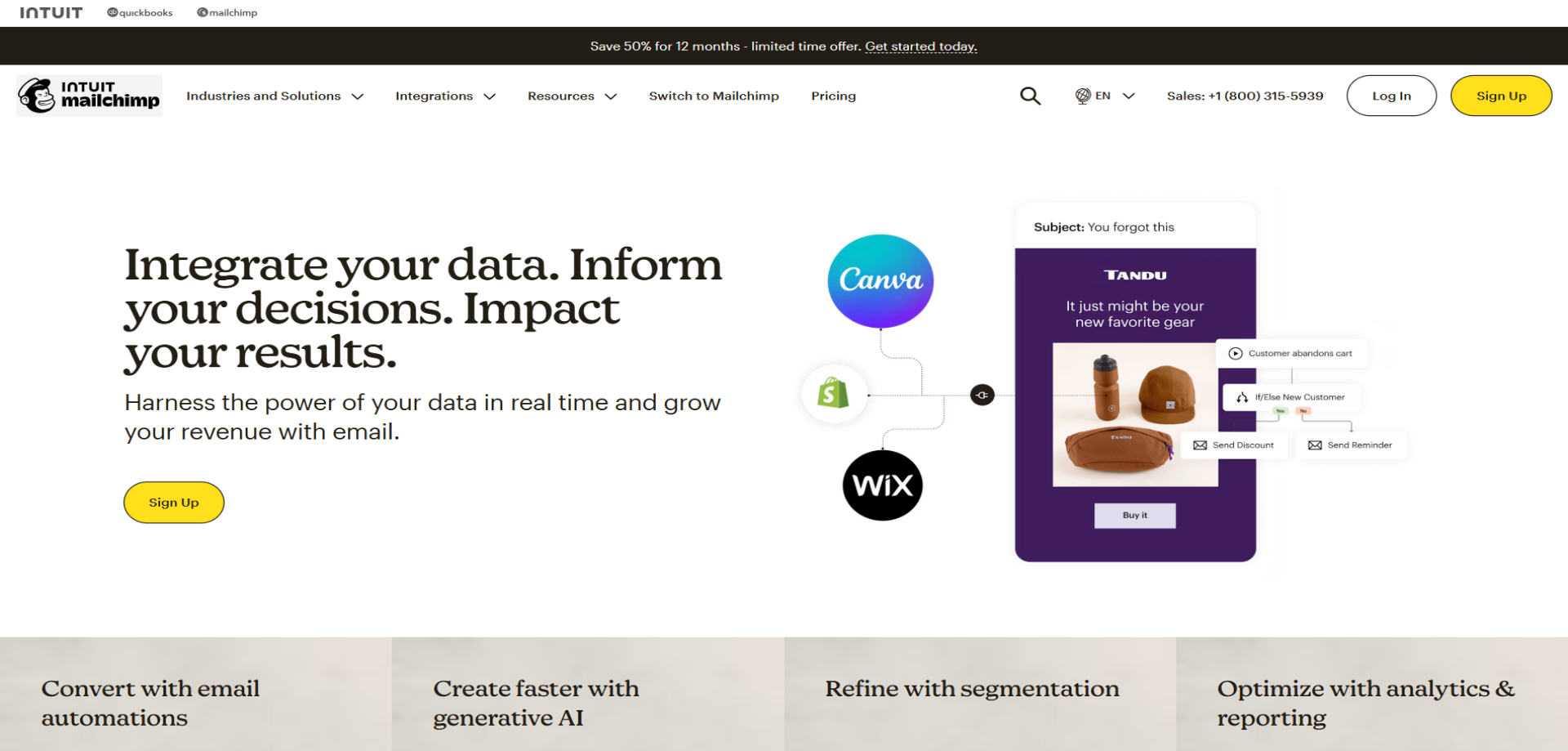
Best for: Small businesses and general-purpose email marketing
Standout strengths:
-
Easy-to-use interface
-
Large template library
-
Broad third-party integrations
Best use cases: Mailchimp suits small businesses looking to launch newsletters or promotional campaigns quickly. It’s commonly used for announcements, content updates, and simple automated emails. Teams without dedicated marketing resources often find it easy to manage.
Watch-outs: As marketing needs become more complex, Mailchimp’s automation and segmentation can feel limited. Reporting is adequate but not especially deep. Many growing businesses eventually look for alternatives.
Pricing snapshot: Mailchimp offers a free plan with limited features, plus paid tiers based on contact count and functionality. Pricing can increase sharply as lists grow. It’s most cost-effective at smaller scales.
Quick take: Mailchimp remains a familiar entry point into email marketing. It’s accessible and reliable, but no longer the most advanced option. Best for straightforward campaigns rather than sophisticated journeys.
Case studies: View all case studies
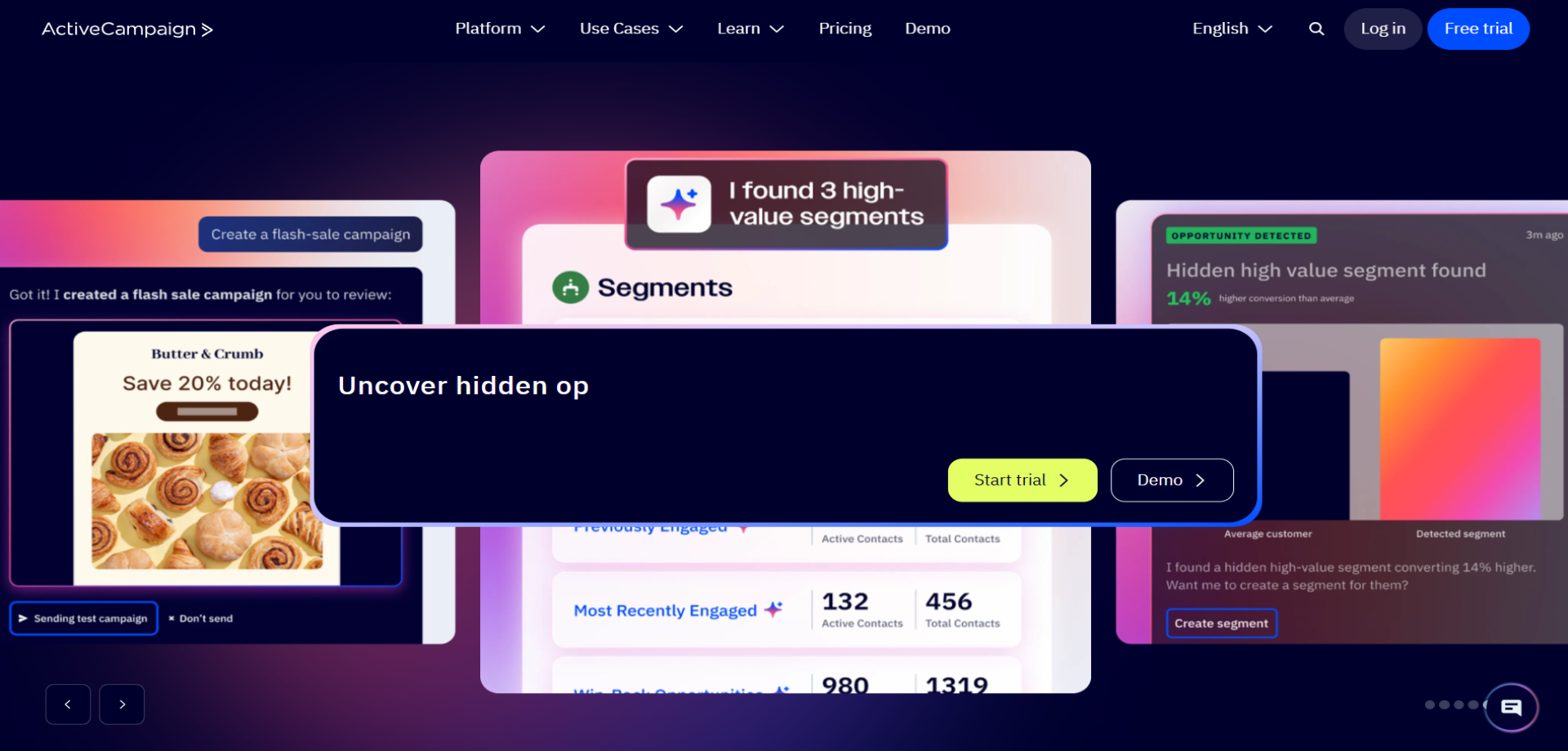
Best for: Businesses that prioritise automation and segmentation
Standout strengths:
-
Best-in-class automation builder
-
Flexible tagging and segmentation
-
CRM functionality included
Best use cases: ActiveCampaign excels at complex customer journeys driven by behaviour and engagement. It’s well suited to lead nurturing, onboarding, and retention campaigns. Businesses with multiple audience segments benefit most from its flexibility.
Watch-outs: The platform has a learning curve, particularly for non-technical users. Initial setup can take time to get right. However, the payoff comes once automations are fully built.
Pricing snapshot: Pricing scales based on contacts and feature tiers. There is no permanent free plan, but entry-level pricing remains competitive. Advanced automation features require higher tiers.
Quick take: ActiveCampaign is one of the strongest email marketing platforms for automation-first teams. It rewards strategic thinking and planning. Ideal for businesses that want fine-grained control.
Case studies: View all case studies
5. Brevo

Best for: Cost-conscious teams needing email and SMS
Standout strengths:
-
Pay-by-send pricing model
-
Built-in SMS marketing
-
Strong deliverability reputation
Best use cases: Brevo works well for businesses that send frequent emails but manage smaller lists. It’s commonly used for transactional messaging, promotions, and SMS campaigns. Start-ups and SMEs often appreciate its flexible pricing structure.
Watch-outs: The email editor feels less refined than some competitors. Template options are more limited. Advanced automation features are present but not best-in-class.
Pricing snapshot: Brevo offers a free tier, with pricing based primarily on email volume rather than contacts. This can make costs more predictable. SMS usage is charged separately.
Quick take: Brevo is a practical and affordable option for teams balancing email and SMS. It prioritises deliverability and value over flashy features. A strong choice for budget-aware marketers.
Case studies: View all case studies
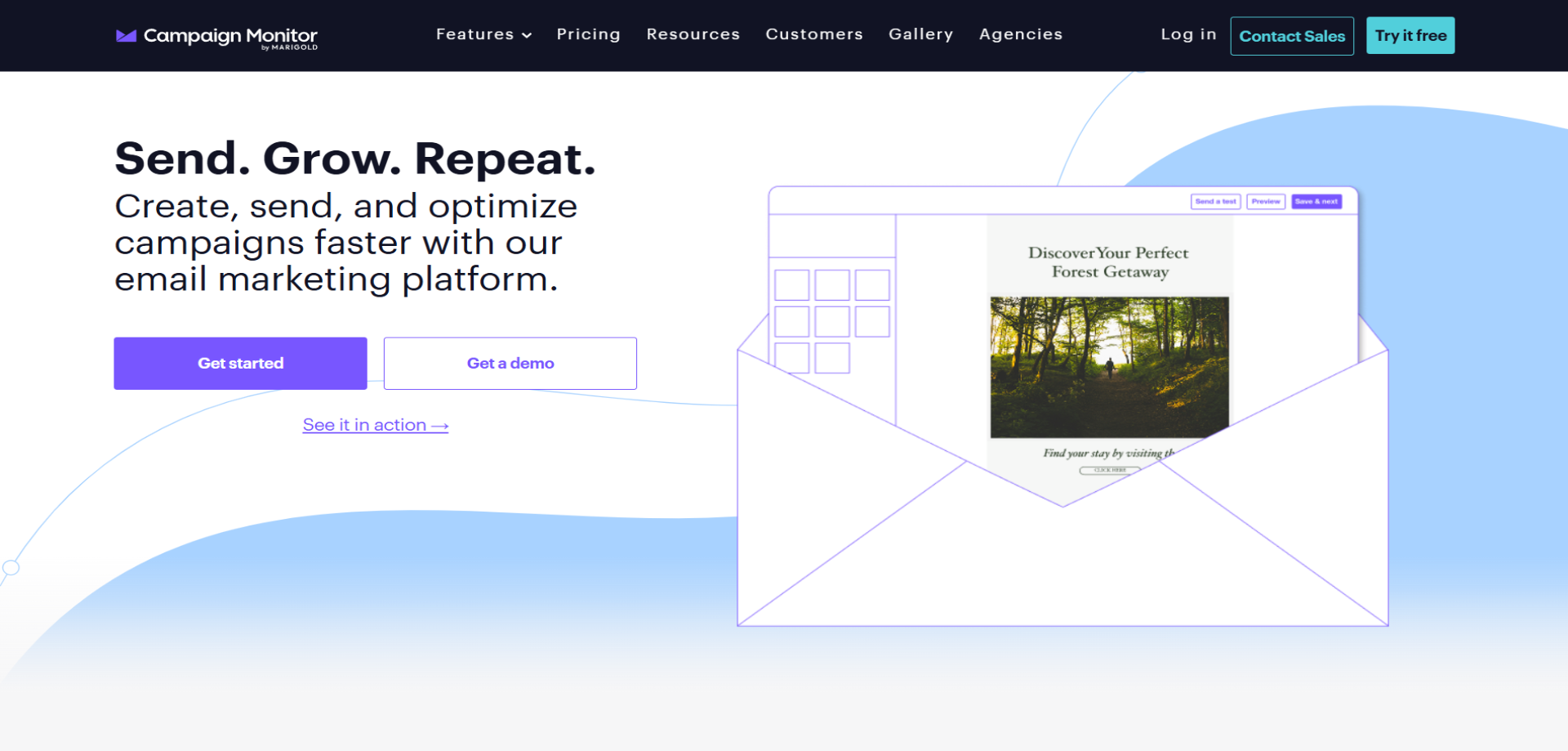
Best for: Brands that prioritise design-led emails
Standout strengths:
-
High-quality templates
-
Strong brand control features
-
Easy-to-use editor
Best use cases: Campaign Monitor is ideal for brands that want visually polished marketing emails. It’s often used for newsletters, campaigns, and brand announcements. Design teams appreciate its attention to layout and styling.
Watch-outs: Automation and personalisation options are more limited than competitors. It’s less suited to behaviour-driven journeys. Best for broadcast-style campaigns.
Pricing snapshot: Paid plans are based on list size and sending volume. There is no free plan. Pricing reflects its premium design focus.
Quick take: Campaign Monitor shines when presentation matters most. It’s less about complex automation and more about brand consistency. Best for design-conscious teams.
Case studies: View all case studies
7. ConvertKit
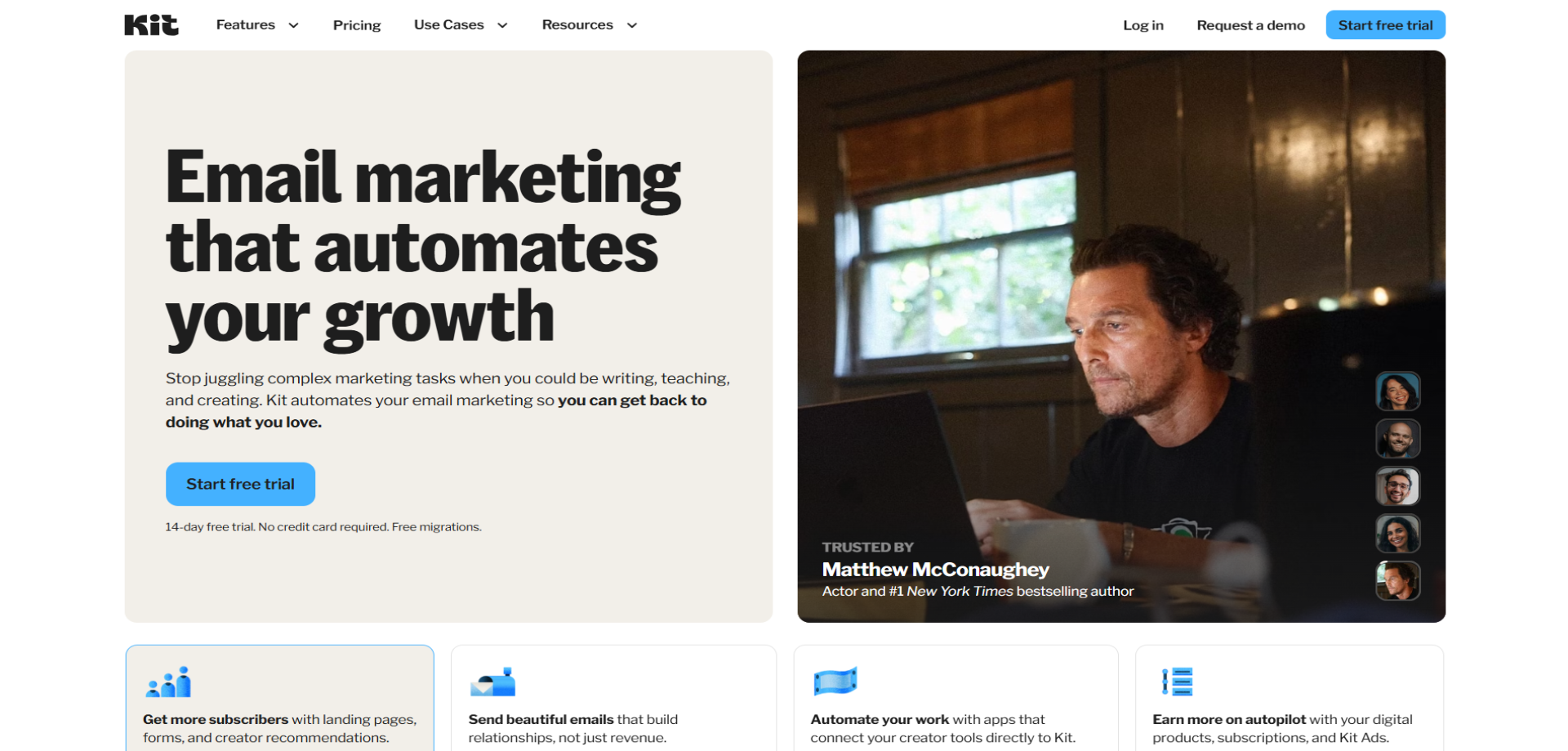
Best for: Creators, bloggers, and solo operators
Standout strengths:
-
Simple automation workflows
-
Creator-focused features
-
Clean, minimalist interface
Best use cases: ConvertKit is built for creators who want to grow and monetise audiences. It supports newsletters, product launches, and audience segmentation with minimal friction. Many solo operators value its clarity and speed.
Watch-outs: Design options are intentionally limited. It’s not ideal for heavily branded or visual campaigns. Advanced reporting is also relatively basic.
Pricing snapshot: A free plan is available for small lists, with paid tiers scaling by subscribers. Pricing is transparent and predictable. Features unlock gradually as plans increase.
Quick take: ConvertKit removes complexity for creators who just want email to work. It focuses on relationships, not flashy design. A strong choice for audience-led businesses.
Case studies: View all case studies
8. GetResponse

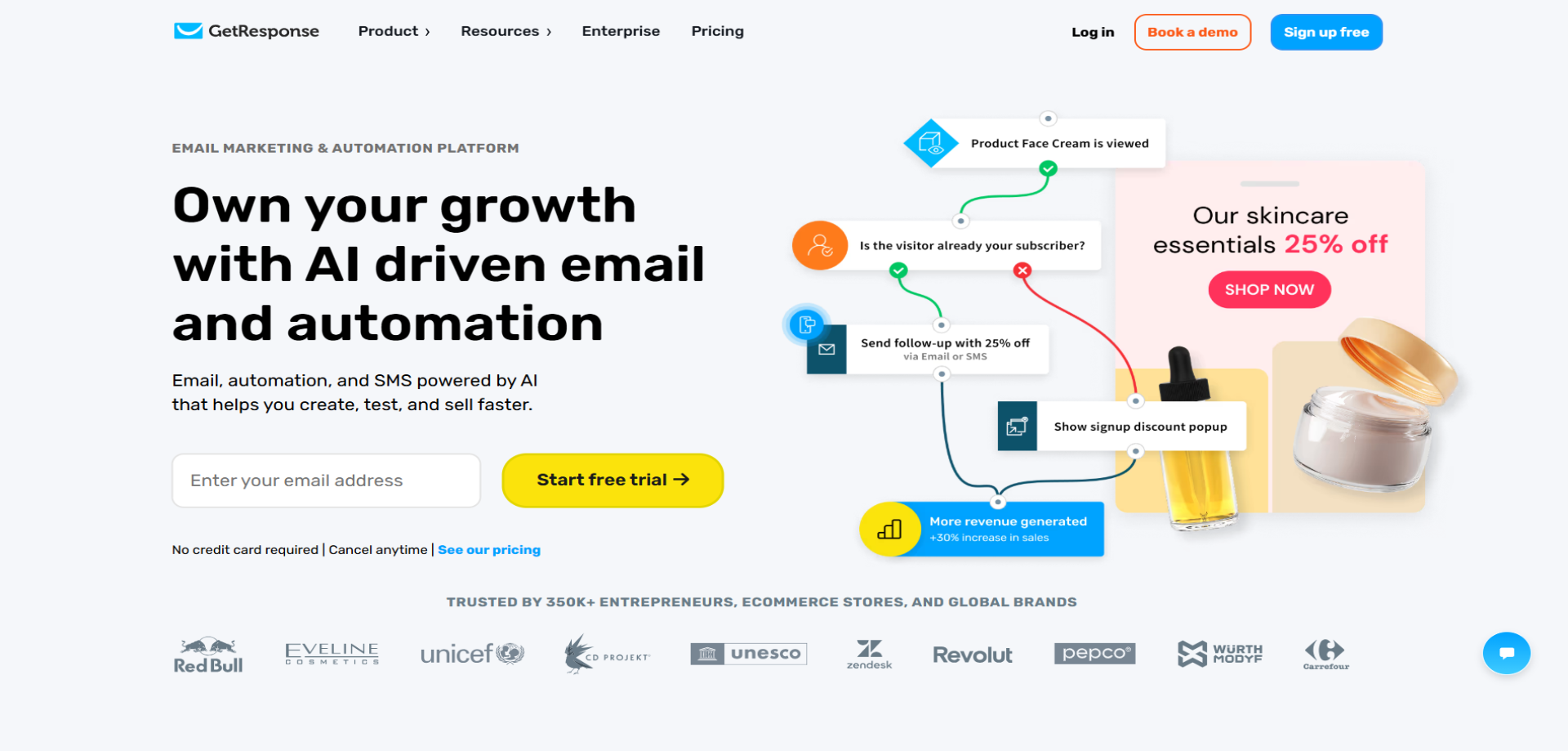
Best for: Marketers wanting email plus conversion tools
Standout strengths:
-
Built-in landing pages and webinars
-
Automation workflows
-
Conversion funnel features
Best use cases: GetResponse suits marketers running lead generation and online campaigns. It’s popular for webinars, courses, and gated content. Teams wanting email and conversion tools in one place benefit most.
Watch-outs: The interface can feel crowded due to the number of features. Some tools overlap in functionality. It may take time to find the most efficient workflow.
Pricing snapshot: GetResponse offers a free plan with limitations, plus paid tiers based on contacts and features. Higher plans unlock automation and webinar tools. Pricing is mid-range.
Quick take: GetResponse offers strong value as an all-in-one marketing platform. It goes beyond email alone. Ideal for marketers focused on lead capture and conversion.
Case studies: View all case studies
9. SendGrid
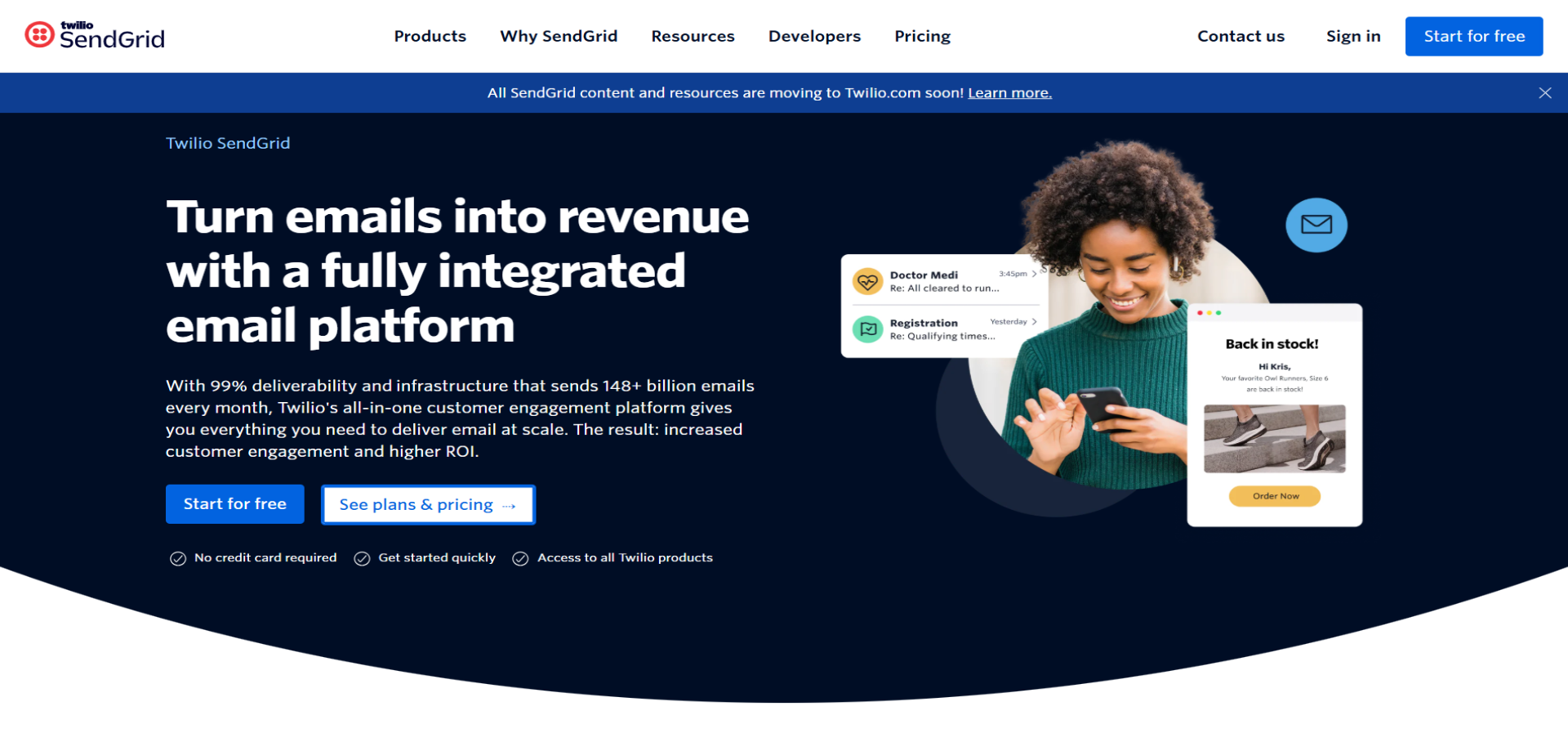
Best for: Developers and transactional email at scale
Standout strengths:
-
Industry-leading deliverability
-
Robust API
-
Scales easily for high-volume sending
Best use cases: SendGrid is best for transactional emails such as receipts, password resets, and notifications. It’s commonly used by SaaS platforms and apps. Developers value its reliability and control.
Watch-outs: Marketing features are limited compared to full email marketing platforms. It’s not designed for newsletters or advanced automation. Best used alongside a marketing tool.
Pricing snapshot: A free tier is available, with usage-based pricing as volume increases. Costs scale predictably. High-volume senders benefit most.
Quick take: SendGrid is about reliability, not creativity. It’s a technical solution for essential messages. A backbone tool rather than a marketing centrepiece.
Case studies: View all case studies
10. MailerLite
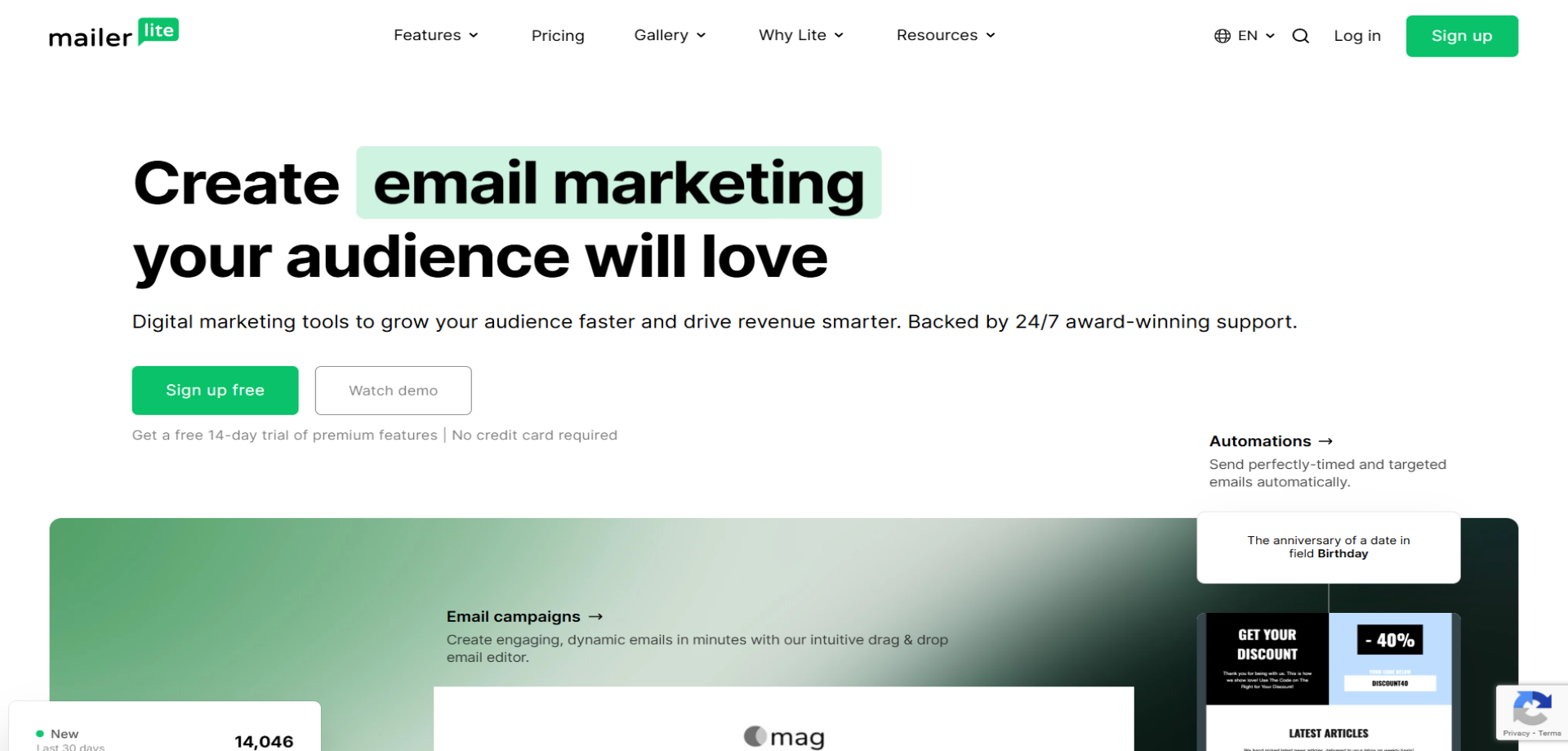
Best for: Small teams and budget-friendly email marketing
Standout strengths:
-
Clean, intuitive UI
-
Good automation for the price
-
Generous free plan
Best use cases: MailerLite works well for newsletters, simple automations, and growing lists. It’s popular with start-ups and small teams. Users often praise its ease of use.
Watch-outs: Advanced personalisation and reporting are limited. It may not scale well for complex strategies. Best for straightforward campaigns.
Pricing snapshot: MailerLite offers a generous free plan, with affordable paid tiers. Pricing scales by subscriber count. One of the most cost-effective options available.
Quick take: MailerLite delivers strong fundamentals without unnecessary complexity. It’s accessible and dependable. Ideal for teams starting out.
Case studies: View all case studies
11. Drip

Best for: Ecommerce brands wanting advanced personalisation
Standout strengths:
-
Visual automation workflows
-
Revenue-focused reporting
-
Strong ecommerce integrations
Best use cases: Drip is designed for ecommerce lifecycle marketing. It supports detailed segmentation and personalised messaging. Brands focused on retention and repeat purchases benefit most.
Watch-outs: Drip is not suitable for non-ecommerce use cases. It assumes access to transactional data. Smaller retailers may find it complex.
Pricing snapshot: Pricing is based on contact volume, with no free tier. Costs reflect its advanced feature set. Best for established ecommerce businesses.
Quick take: Drip is a specialist tool for serious ecommerce marketers. It prioritises data-driven messaging. Best used when personalisation is a core strategy.
Case studies: View all case studies
12. Constant Contact
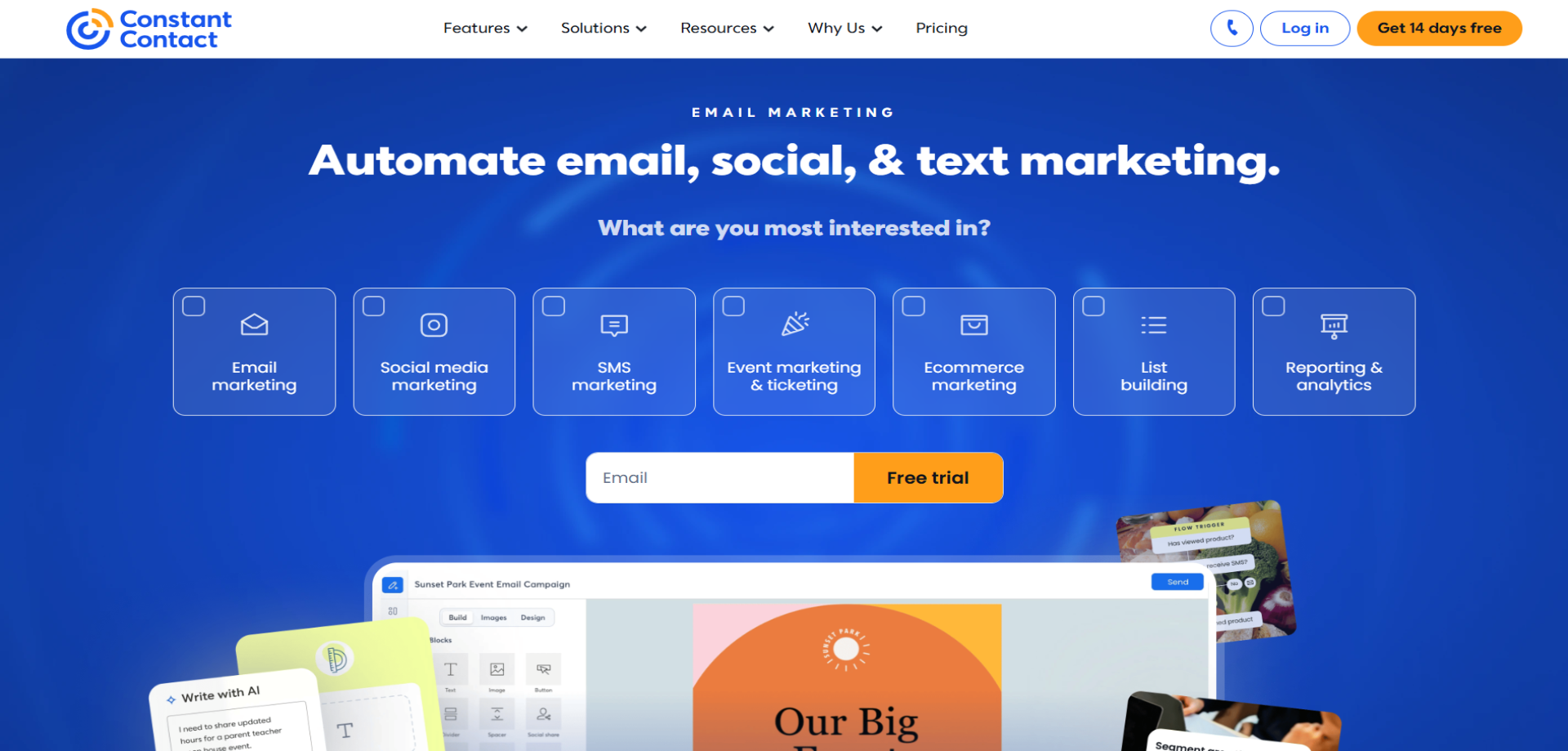
Best for: Traditional small businesses and non-profits
Standout strengths:
-
Easy onboarding
-
Event and survey tools
-
Good customer support
Best use cases: Constant Contact suits local businesses, charities, and community organisations. It’s often used for announcements, updates, and events. Simplicity is its main appeal.
Watch-outs: Automation and segmentation are limited. It’s not designed for complex journeys. Reporting is relatively basic.
Pricing snapshot: There is no free plan, with pricing based on contacts. Costs are predictable. Best for consistent, low-complexity use.
Quick take: Constant Contact prioritises ease and reliability. It’s not cutting-edge, but it’s dependable. Best for traditional email needs.
Case studies: View all case studies
13. Omnisend
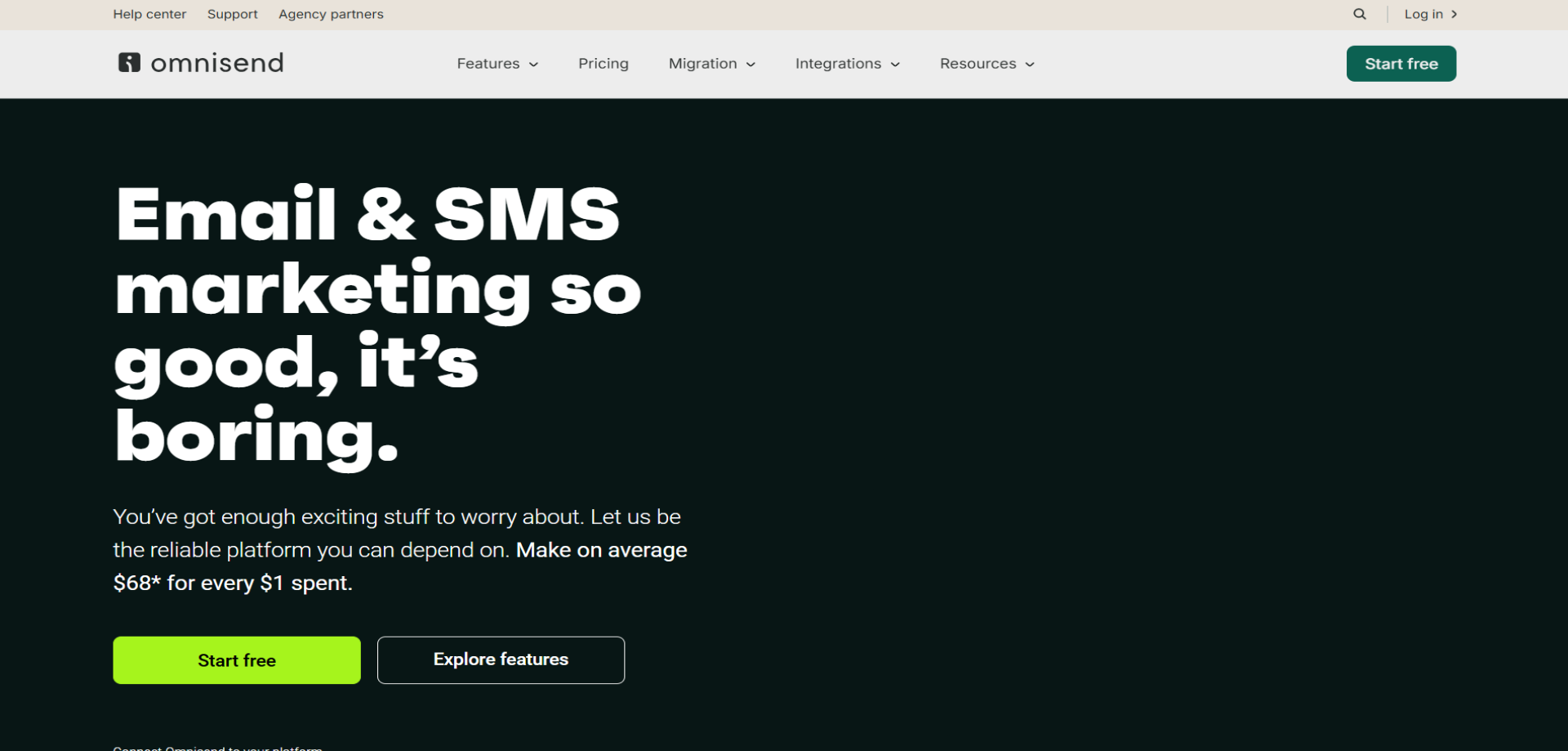
Best for: Omnichannel ecommerce marketing
Standout strengths:
-
Email, SMS, and push notifications
-
Ecommerce-first automation
-
Pre-built workflows
Best use cases: Omnisend supports ecommerce brands running multichannel campaigns. It’s ideal for combining email with SMS and push notifications. Retailers benefit from its ready-made workflows.
Watch-outs: Less flexible outside ecommerce. Customisation options can be limited. Best for retail-focused teams.
Pricing snapshot: Omnisend offers a free tier, with pricing scaling by list size and message volume. Multichannel usage affects cost. Suitable for growing ecommerce brands.
Quick take: Omnisend simplifies omnichannel marketing for ecommerce. It’s efficient and purpose-built. A strong alternative to larger platforms.
Case studies: View all case studies
14. Zoho Campaigns
Best for: Businesses already using Zoho’s ecosystem
Standout strengths:
-
Seamless Zoho CRM integration
-
Competitive pricing
-
Solid automation basics
Best use cases: Zoho Campaigns works best when paired with Zoho CRM. It supports B2B email campaigns and customer communication. Teams already in Zoho gain the most value.
Watch-outs: The interface feels dated compared to newer tools. Customisation is limited. It’s less appealing as a standalone solution.
Pricing snapshot: A free plan is available, with affordable paid tiers. Pricing is competitive. Best for Zoho users.
Quick take: Zoho Campaigns is a practical extension of the Zoho ecosystem. It’s functional rather than flashy. Ideal for existing Zoho customers.
Case studies: View all case studies
15. Moosend
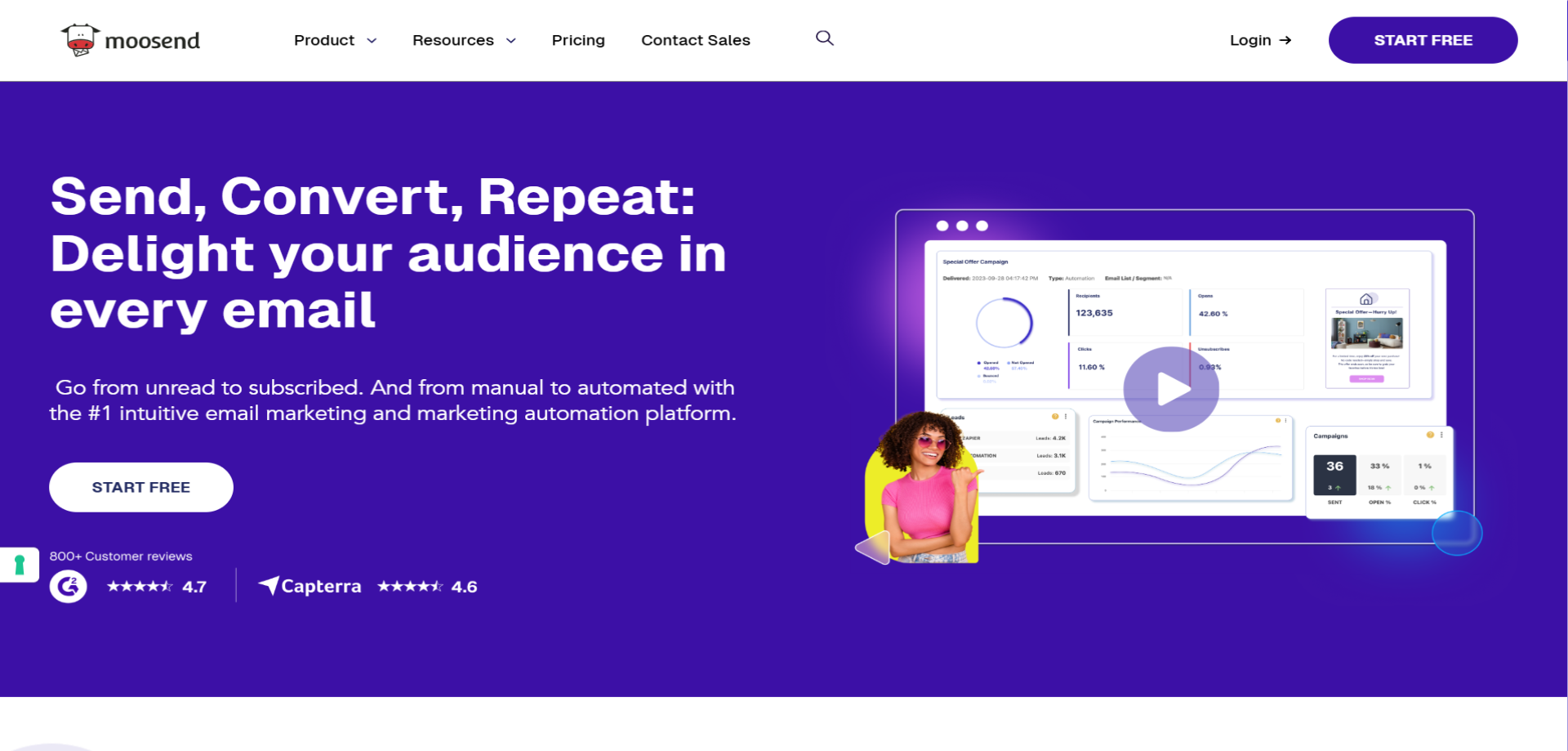
Best for: Growing teams needing affordable automation
Standout strengths:
-
Easy automation builder
-
Good segmentation options
-
Competitive pricing
Best use cases: Moosend supports lead nurturing, ecommerce, and SMB marketing. It’s suitable for teams scaling beyond basic email. Automation is accessible without being overwhelming.
Watch-outs: Fewer native integrations than larger platforms. Brand recognition is lower. Support resources are improving but limited.
Pricing snapshot: Moosend offers a free trial, with paid plans scaling by subscribers. Pricing is competitive. Good value for growing teams.
Quick take: Moosend balances affordability and functionality. It’s a solid mid-market option. Best for teams outgrowing entry-level tools.
Case studies: View all case studies
How These Platforms Were Ranked
-
Automation and personalisation capabilities: We looked at how well each platform supports modern, behaviour-driven email marketing, including triggers, workflows, dynamic content, and audience segmentation. Platforms that made it easy to personalise messages at scale ranked higher than those limited to basic autoresponders. Flexibility and real-world usability mattered more than feature checklists.
-
Ease of use and onboarding: A powerful platform is only valuable if teams can actually use it. We considered interface design, setup time, learning curve, and the quality of onboarding resources such as tutorials, templates, and in-app guidance. Tools that balanced capability with clarity scored best here.
-
Reporting, analytics, and attribution: We assessed how clearly each platform shows performance and impact, from open and click rates to revenue attribution and lifecycle insights. Platforms that connect email activity to meaningful business outcomes ranked higher than those offering surface-level metrics only. Clear reporting is essential for optimisation, not just measurement.
-
Scalability and pricing fairness: Pricing was evaluated in the context of growth, not just entry-level cost. We considered how predictably pricing scales with contacts, sends, or features, and whether value keeps pace as teams mature. Platforms that penalise growth without delivering added value ranked lower.
-
Integration ecosystem and deliverability reputation: We looked at how well each platform fits into a wider marketing or tech stack, including CRM, ecommerce, analytics, and automation tools. Deliverability reputation also played a key role, as even the best campaigns fail if emails don’t reach the inbox. Strong integrations and consistent deliverability boosted rankings significantly.
Choosing the Right Email Marketing Platform Is a Strategic Decision
The best email marketing platform for 2026 depends on how strategically you use email. Some teams need deep automation and CRM alignment to support complex customer journeys, while others prioritise speed, simplicity, and cost control. The right choice is the one that supports your goals today while giving you room to grow tomorrow.
Email remains one of the highest-ROI channels available — but only when it’s implemented properly, integrated into your wider marketing ecosystem, and aligned with clear business objectives. If you’re reviewing platforms, migrating tools, or looking to get more value from the one you already use, expert guidance can make a measurable difference.
Want help choosing, implementing, or optimising your email marketing platform? Contact Munro Agency to talk to a team that specialises in building joined-up email, CRM, and marketing automation strategies that actually deliver results.
FAQs
The best email marketing platform for 2026 depends on your business model and goals. Ecommerce brands typically benefit from platforms like Klaviyo or Omnisend due to their behavioural data and revenue tracking, while B2B teams often choose HubSpot or ActiveCampaign for CRM integration and lead nurturing. The best choice is the platform that aligns with your audience, data maturity, and growth strategy.
To choose the right email marketing platform, start by defining how you use email: newsletters, automation, ecommerce campaigns, or lead nurturing. Next, assess ease of use, automation depth, reporting quality, integrations, and how pricing scales as your list grows. The right platform should support both your current needs and future growth without unnecessary complexity.
Free email marketing platforms are worth using for small lists, early-stage businesses, or basic newsletters. However, free plans often limit automation, segmentation, and reporting, which can restrict growth. As email becomes a core revenue or lead-generation channel, most teams outgrow free plans quickly.
The most important features in an email marketing platform are automation, segmentation, deliverability, analytics, and integrations. Automation enables timely, personalised messaging, while analytics show what’s driving results. Strong integrations ensure email works seamlessly with your CRM, ecommerce platform, or wider marketing stack.
You should consider switching email marketing platforms when your current tool limits automation, reporting, or scalability. Common triggers include rising costs without added value, poor deliverability, or workflows that require manual workarounds. Migrating at the right time can improve performance and future-proof your email strategy.